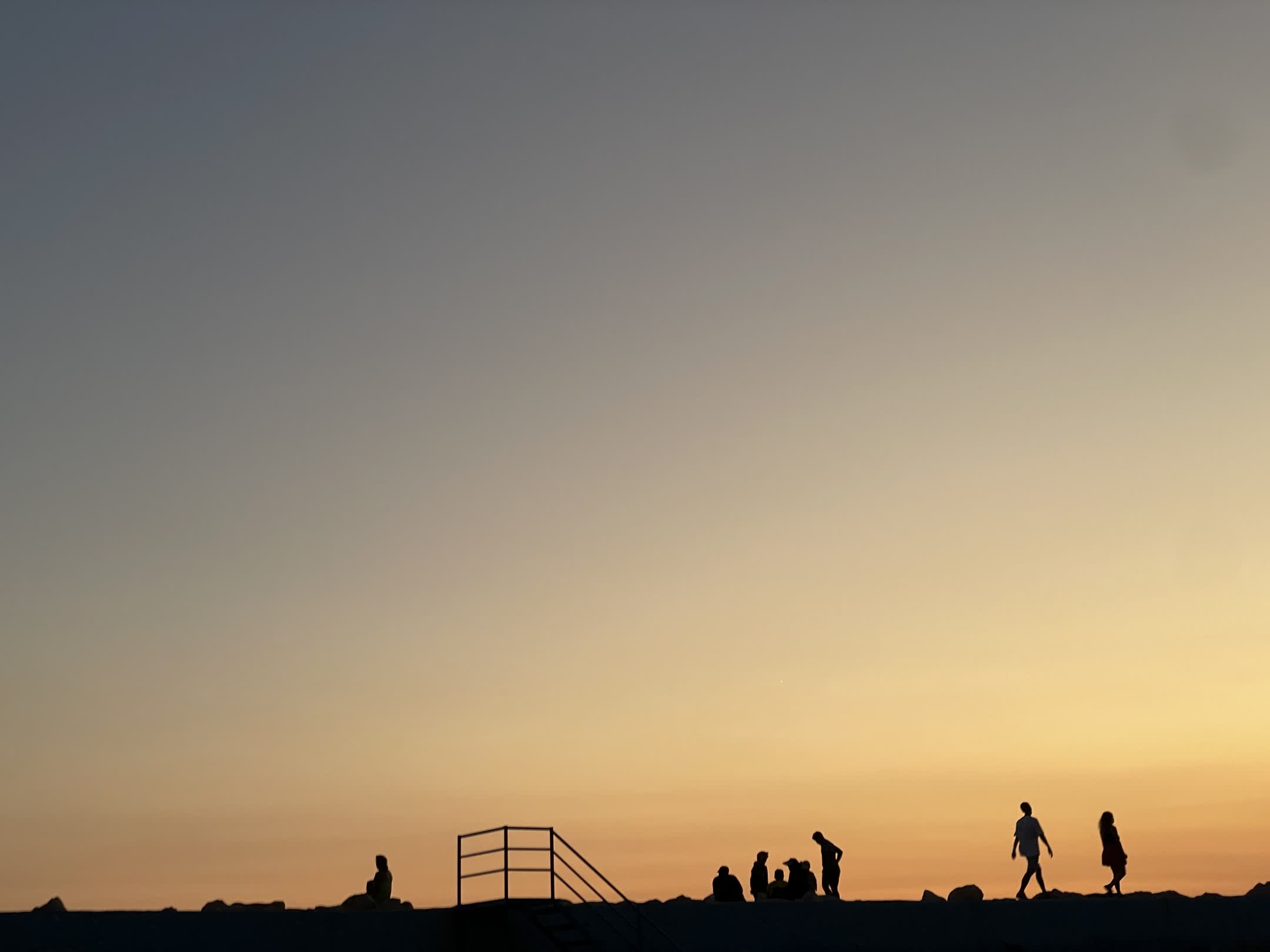
At one in the morning, just after night had fully settled in, we set off to catch the earliest flight at five. The night was still. We thought the last bus would be empty, but as soon as we boarded, we realized it was surprisingly full. Everyone seemed absorbed in their own world; inside the bus felt even quieter than outside.
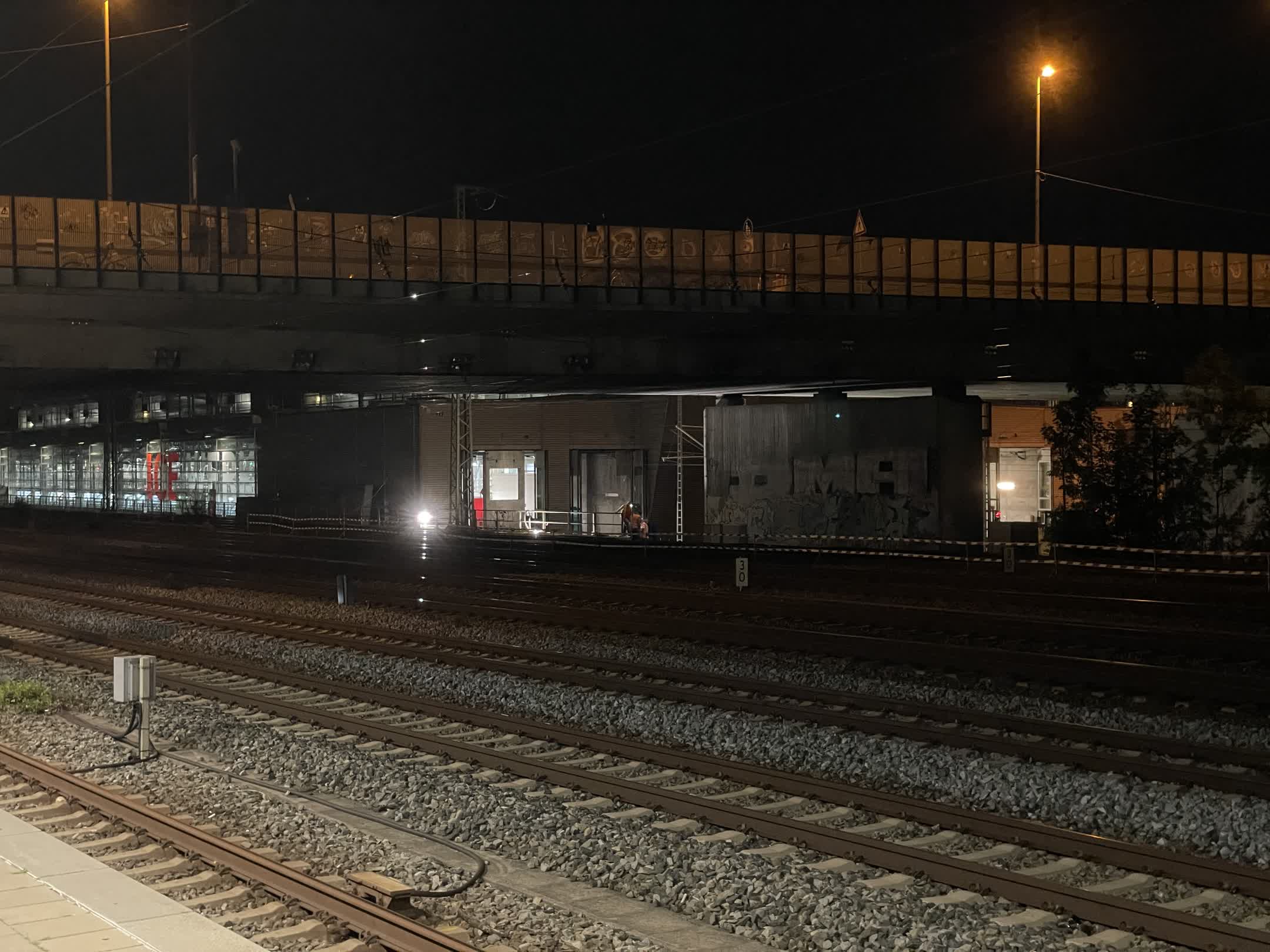
At the transfer station, while waiting on the platform, I saw workers welding on the opposite track—instantly reminding me of all those eternally stagnant construction sites in Germany. So there are places where people actually work, I thought. Where there are people creating order, there are naturally people destroying it. Under the night sky, the drunk were plenty too. Not far away sat a man in light-colored overalls, clutching a bottle of alcohol, crouching at the edge of the platform. After quite a while, he finally stood up and staggered off into the distance. His posture had never changed—only that, from the crack between his buttocks, there was now an additional smear of brown grime. I didn’t want to guess, but couldn’t help guessing.
At the airport, the place was sparsely populated, but not as deserted as I had imagined. Before checking in, we found a place to sit. The airport is open 24/7, which naturally attracts quite a few homeless people. To prevent anyone from lying across the seats, the benches had “specially” installed metal bars between them. Stainless steel—guarding against the homeless, and incidentally, against our plan to rest here. Half asleep, I glanced around. Some people were already sleeping; the men were watching gaming videos to kill time.
Around four, the staff finally started their shift. After checking our luggage, we followed the crowd upstairs to wait for security to open. We waited and waited—over an hour with no sign of the doors opening. Someone ahead grabbed a passing staff member and asked. Only then did we learn that most people were in the wrong queue. We were waiting at D, but should’ve gone to B. D had no early flights, hence no staff. B had been open for a while. So before sunrise, a large group of us bolted toward the correct entrance.
Half asleep, one’s attention and logic are full of gaps. At border control, I mistook CH for CN and thought my passport could use the fast lane. The lady at the gate immediately stopped me and pointed toward the distant regular windows. Only then did I realize I’d misread it. Head down, I quickly walked over to the correct line.
At six, we boarded the plane. Since we’d booked a budget airline, choosing seats cost extra. But here’s a little tip: if you pay attention while booking, you can actually skip seat selection entirely. During check-in, the system assigns seats automatically, for free. Once onboard, we discovered the back rows were nearly empty—you could practically lie down. Budget airlines sure have their many little tricks to make you spend.
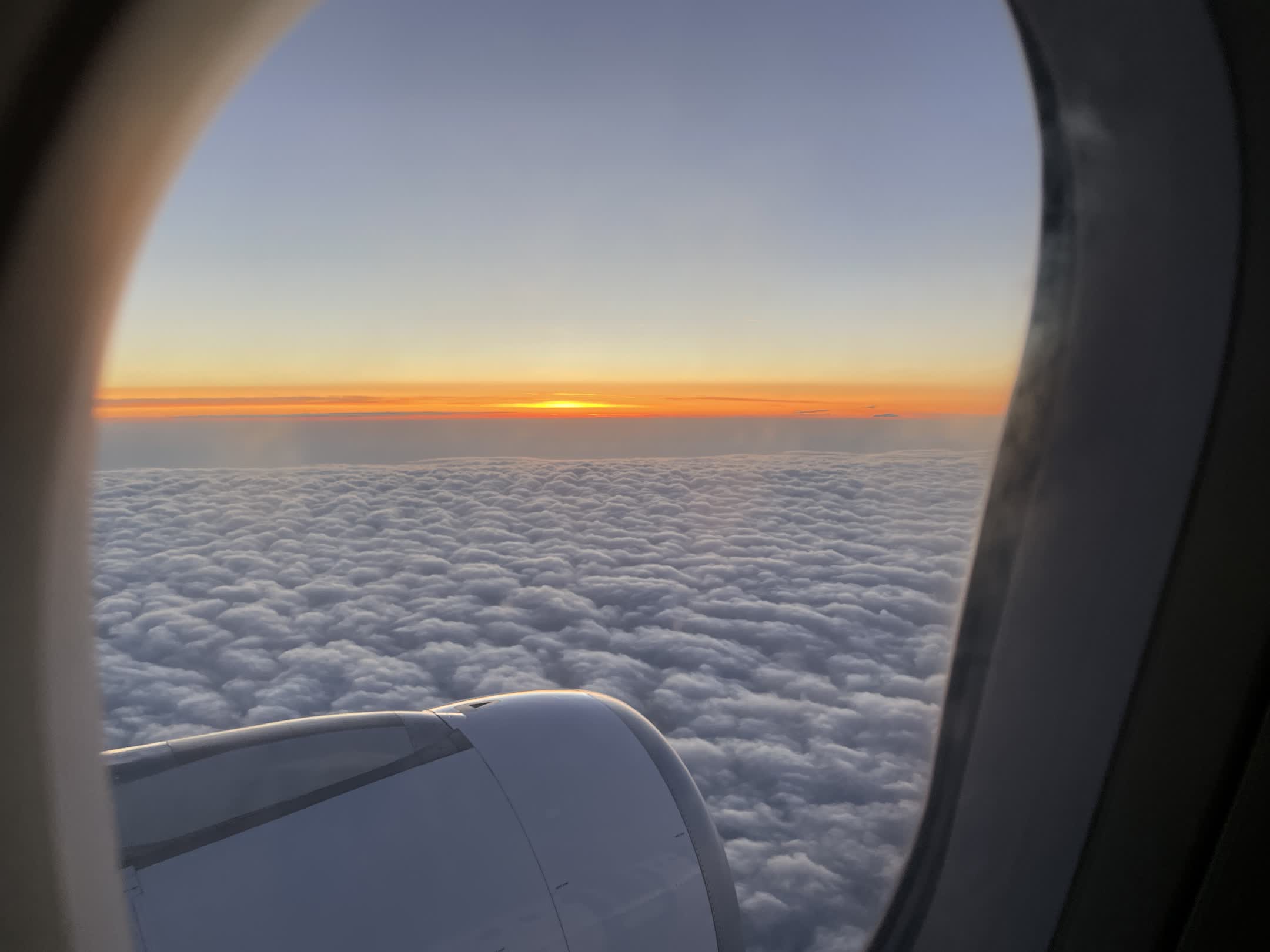
After landing, the air was hot, but softened by a slight breeze, so it didn’t feel suffocating.
Walking through the arrival corridor, the right side opened into an atrium. Through the glass, you could see a tiny children’s play area below. The toys carried that old plastic shine, their colors bright but patches of paint already peeling—very much like the vibe of third- or fourth-tier malls back in China.
The border control booths were lined up in the middle of the hall, and passengers freely crowded toward them. Normally I picture immigration as solemn police windows, but here it felt more like ticket counters at a train station—utterly chaotic. We had printed our visas just in case they were strict. I handed over the paper, but the officer didn’t even unfold it. He stamped the passport and waved us through.
The baggage hall kept the same aesthetic. While waiting, I wanted to use the restroom. As expected, it smelled terrible. The reason was obvious: every stall had a huge bin inside, piled with all kinds of paper. I remembered reading somewhere that older plumbing systems can’t handle flushing toilet paper, so bins became necessary. Another discovery: one of the stalls was a squat toilet—rare in Europe, common in Asia, and apparently alive here at the intersection of Central Asia. As I was musing, my eyes caught a water hose nearby—but no waste bin. That thought alone was… unsettling.
After picking up our luggage, we walked out and found an exchange counter at the corner: euro to lira at 1:29. Looked fine—until we reached the city center, where it was 1:36. I finally understood the airport’s strategy: charging you while pretending to offer a service. No wonder the entire huge airport looked worn, while that tiny exchange booth looked freshly renovated.
Standing fully outside, even in the shade, my back was soaked within minutes. As someone used to cold Germany, I suddenly had to adjust to the heat, calm my heat-agitated nerves, and think clearly about our next steps. According to online info, there should’ve been a light-rail station outside. But from where we were standing, the entrance led only to a vast parking lot—nothing resembling a rail station. So we followed the crowd, avoiding travel agency booths and taxis. Turkish taxis have a terrible reputation in both Chinese and English internet spaces.
Under this double assault of “new environment” + “high temperature,” our brains downgraded to single-thread mode. We resorted to the oldest method: asking for directions.
That one question stretched across an entire street. Many locals didn’t speak English, making communication difficult. So we had to repeat the same question to multiple people—security guards, workers resting under metal pillars, young couples. Everyone was friendly, smiling, patient. After multiple confirmations, we finally understood: we had to take a shuttle bus or taxi from Terminal 2 to Terminal 1, and only then could we take the city bus. Municipal buses required full fares; the airport provided zero transfer services.
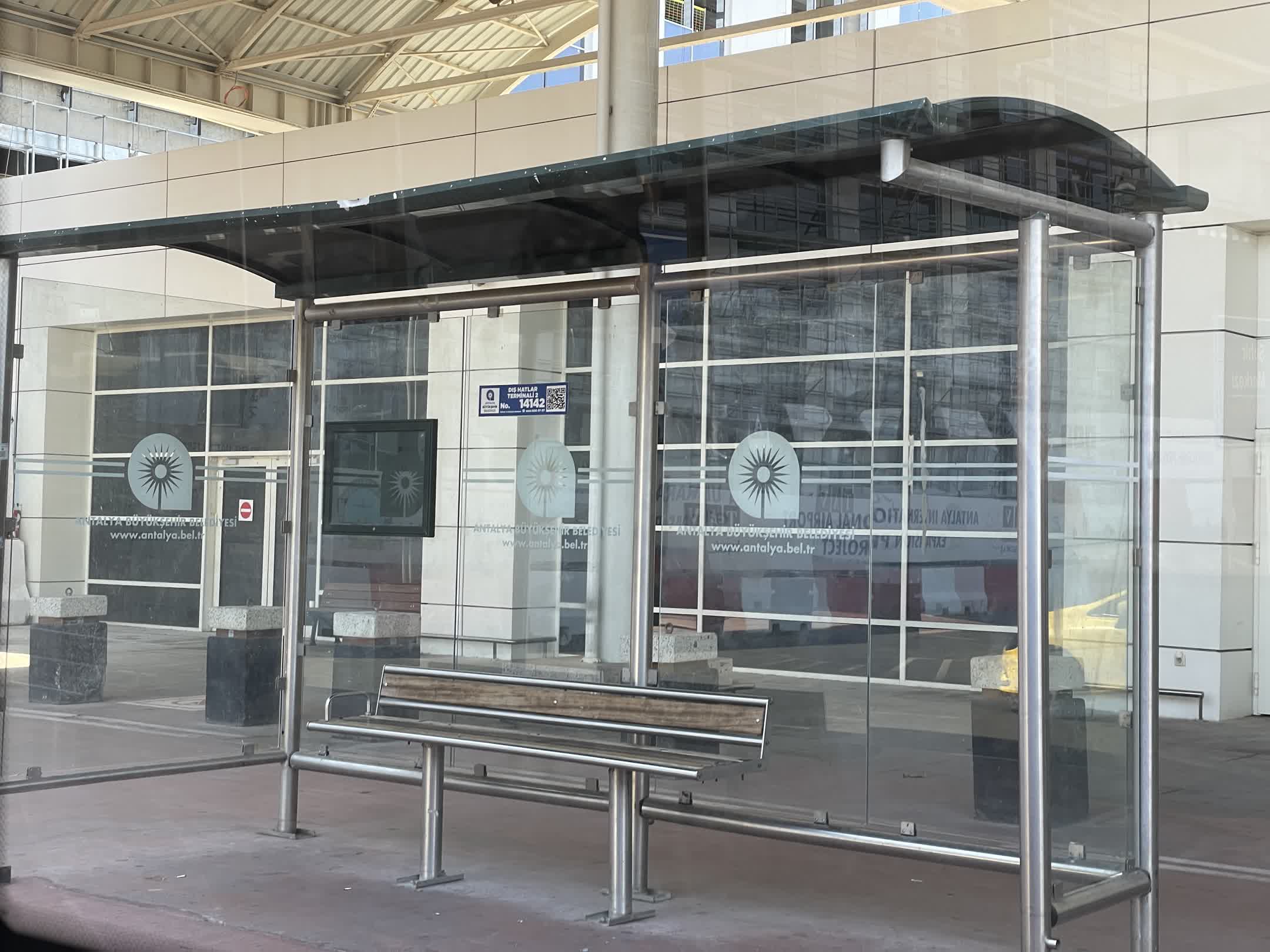
After accepting this fact, we had to accept another: such an important stop was just awkwardly placed by the gate with no signs, no schedule—nothing but shabby old ads. “Hidden in plain sight,” but truly in the strangest way. Only when we saw a guy already waiting did we confirm it was indeed a functioning stop. While waiting, we chatted with him—he was Russian and traveling alone. He said he’d already been waiting over an hour, and our hearts immediately sank. But before our doubts grew too warm, the bus suddenly appeared, and our spirits jumped right back up with the blast of air conditioning.
We tapped our credit cards, waited briefly, and the bus set off. I nervously watched the navigation on my phone, afraid we’d board the wrong bus and end up in the middle of nowhere. Only when the little on-screen arrow aligned with the planned route did I finally relax.
The light-rail station wasn’t hard to find—just a short walk from the terminal entrance. Taking the elevator up, the station continued the rustic vibe: shaky turnstiles and a lonely ticket machine.
A woman was desperately tapping at the machine. When she saw us, she lit up as if rescue had arrived, asking for help in simple English. But this was a classic “the blind leading the blind.” We tried switching the machine to English, poking around, but even though the vocabulary was understandable, the logic was incomprehensible. No station names, no clear instructions—just something about “5 uses” or “11 uses.” Utterly baffling.
We exchanged confused looks, but the ticket situation remained hopeless—until a couple walked over.
They seemed like locals, young and kind. They checked the machine but also couldn’t explain the system. Communication wasn’t easy, so the guy simply went for the nuclear option: he used his own transit card and bought tickets for all of us—five in total. One ticket was about 20 lira. Not expensive, but his warmth felt priceless. I wanted to pay him, but had zero lira on hand, and he didn’t seem willing to accept money anyway. So we thanked him repeatedly.
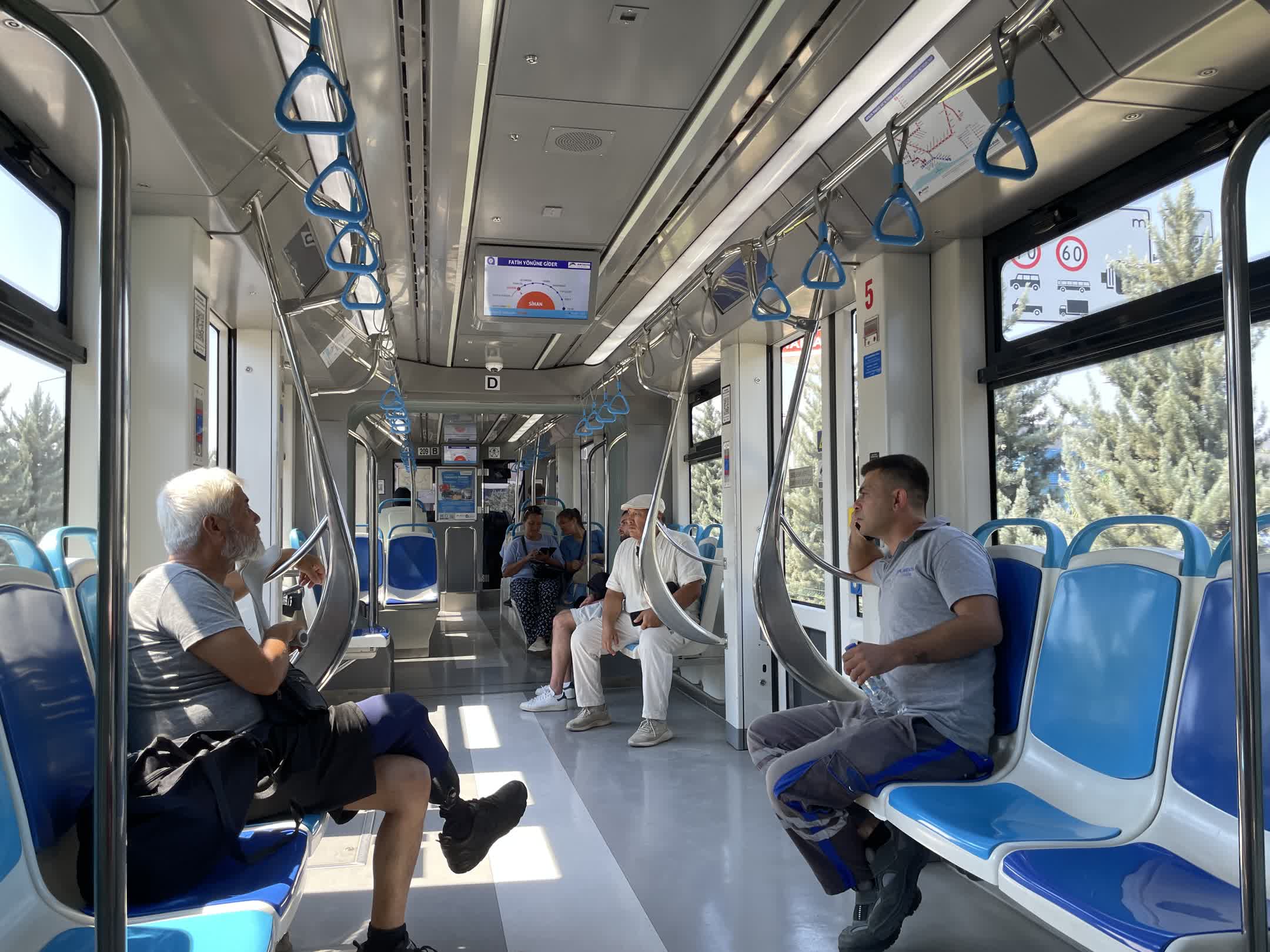
A short walk down the platform and the train was already waiting. Since this was the first stop and the line was simple, no fear of going the wrong way. The carriage was spacious and quiet. We sat down, the air-conditioning blasting, and my heart and mind finally settled.
The intercity bus station was located northwest of town, sparse and far less lively than the city center. We followed the signs to the entrance; the sun still blazed. The station looked like a massive open pavilion with an orange-red serrated roof. Its steel frame was covered in rust and stains. Glass panels—brown or clear—formed the hall, plastered with remnants of tape and paper from countless old notices. Areas with leaks or collapsed tiles were simply marked off with red-and-white tape as makeshift repairs.
After a flimsy security check that felt like a free bonus with prepaid phone credit, we entered the hall. Counters for various bus companies lined the area, though half were empty at this hour. We were heading to Kaş, so we scanned the signs and quickly found the right counter.
“Kaş?” “Kaş!” And that was essentially the entire transaction.
“Leaving in 15 minutes,” the old man at the counter told us. It felt a bit rushed—we still needed to organize our luggage and wash up—but since the timing worked, we didn’t bother comparing prices. Once ready, we followed the direction the old man pointed to and met another old man by the back door. After confirming our destination, I placed our luggage in the compartment.
Some front seats were already taken—mostly locals, not tourists. We found our spots. The seats were a dull red, carrying a worn-out grandeur.
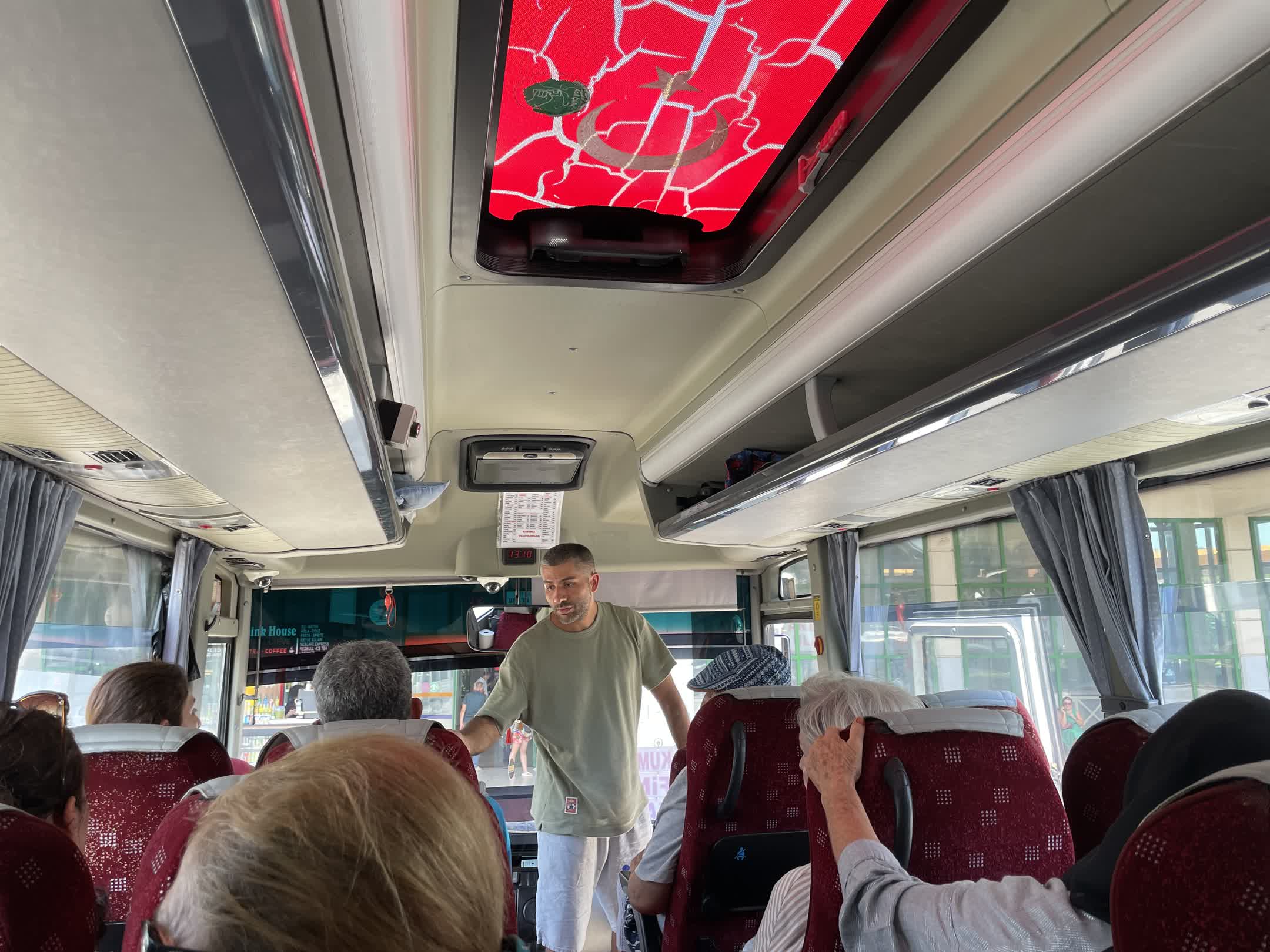
Though he said 15 minutes, 20 passed without movement. We watched the driver and soon understood the rule. The internet wasn’t lying: Turkish intercity buses don’t follow strict schedules. The reason is simple—people. Even though they were speaking Turkish, I could practically imagine the dialogue: “Plenty of seats left! Going to Kaş! Leaving in ten! Last call!” Filling the seats is priority number one. Only when almost full do they depart. It reminded me of my childhood experiences—except now, in another country, it felt almost archaeological, and oddly “international.”
Of course, the driver was an older gentleman—another hallmark of long-distance buses. White hair, black eyebrows, square face, wrinkles from age but eyes full of spirit. White polo shirt, black slacks, leather belt, shiny dress shoes. The fabric was not expensive, and you could see the undershirt beneath.
His entire appearance and demeanor radiated one thing: seasoned professionalism. With someone like him behind the wheel, no matter how fast the bus goes, you feel safe. I could easily imagine the scenes—him navigating winding mountain roads, routes he’d driven for decades like strolling through his backyard; hands turning the oversized wheel like practicing tai chi; the road bumping, passengers swaying, yet the driver’s inner calm an unshakable truth.
For such a character, I never hesitate with admiration.
The bus finally departed—but celebrations were premature. There’s a second reason these buses are never on time: the driver picks up extra passengers along the way. A few kilometers in, the bus slowed and stopped. After a short exchange, someone boarded. When he saw the seats were full—yes, now they were full—the driver pulled out a cushion from above and placed it beside the driver’s seat at the front of the aisle. A VIP spot reminiscent of a punished student sitting next to the blackboard. Once the man settled, we continued.
This happened so often that I could count the stops on both hands. The journey felt endlessly long and dull—just like the bus’s “air-conditioning,” which blew something that felt cool to the touch but never actually cooled anything. Luckily, we were exhausted and needed sleep. After dozing off, we finally arrived in Kaş.
After some final rounds of direction-checking and minor hassles, we reached our accommodation in Kaş by evening.
Though less than a day had passed—from early morning departure to evening arrival—our bodies and minds felt as if several days had gone by. A surge of new environments and information had overwhelmed us; our brains constantly learning and solving unexpected problems. It was exhilarating—and absolutely unforgettable.