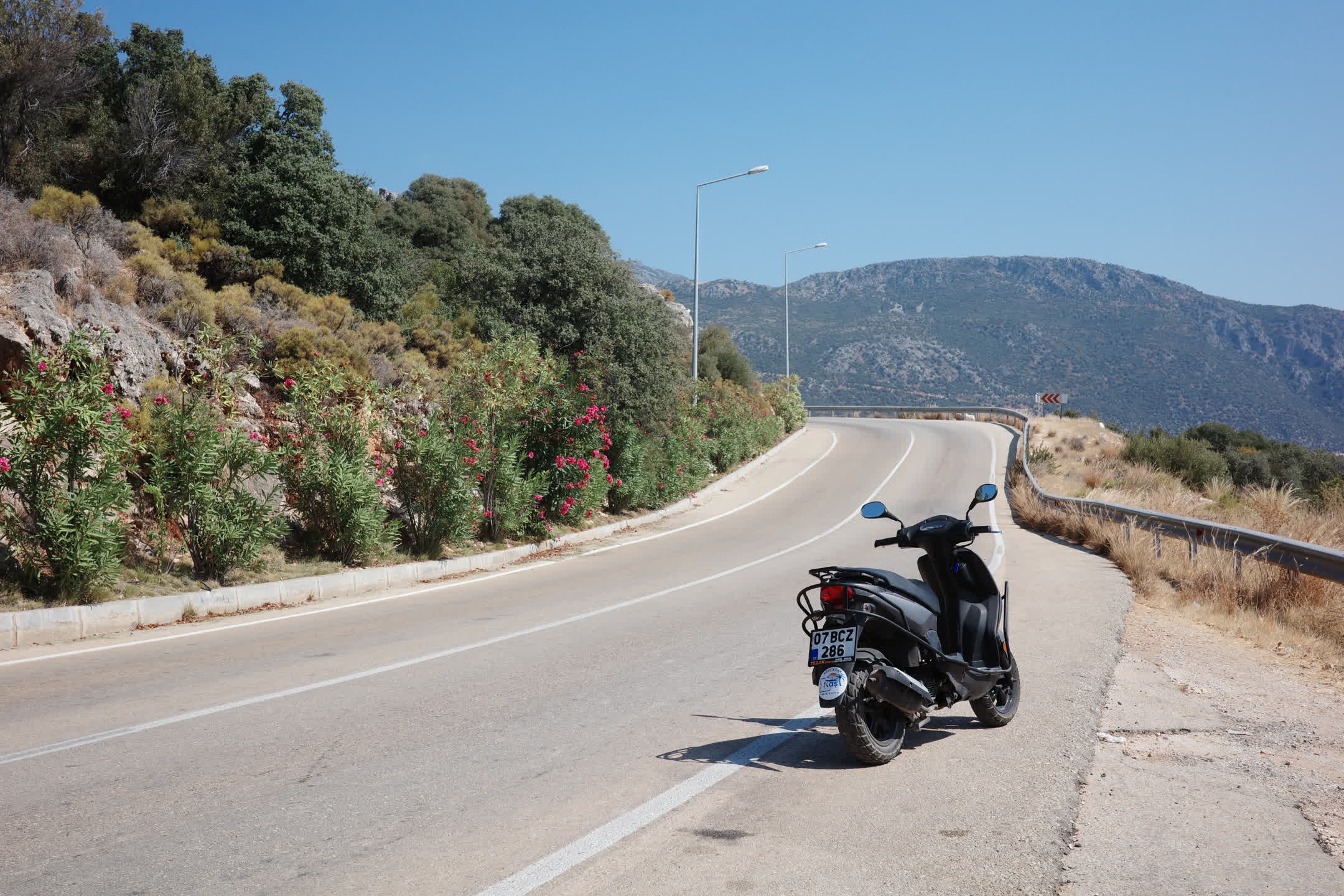
Kaş is a small town with just one main street, yet cars are plentiful and nearly all remaining roadside spaces are taken up by scooters. In my mind, scooters are the perfect mode of transportation: small enough to weave between houses, powerful enough to handle steep terrain, with enough range to reach remote neighborhoods or beaches. Scooters were everywhere in this town. We weren’t planning to rent a car, but to increase our mobility and freedom, we decided to try a scooter.
On the map, we found the first rental shop. We walked over in the evening; the shop door was wide open, a few scooters scattered outside, but no sign of the owner. We stepped inside, called out a few times—no response. So we left, planning to return after dinner.
After dinner, when we came back, we finally saw the shop owner—a cheerful older man—eating with his child nearby. Seeing customers, he quickly came over. His English was excellent. He explained the price: 400 lira per day, no deposit. If an accident happens and it’s the other party’s fault, their insurance covers it; if it’s our fault, we simply pay for the damages.
It sounded like a very thorough explanation—but my partner’s timely reminder held back the wild horse in me that was ready to bolt.
The moment I heard “no deposit,” and felt the price was roughly acceptable, my face lit up with a kind of “what a bargain!” eagerness—ready to close the deal immediately. But my partner had done research beforehand and saw online mentions of 150 lira per day. So she was much more cautious. After aligning our thoughts, we told the shop owner we’d think about it and come back the next day if we decided to rent.
In Türkiye, transactions often depend on whether you’re a local and whether you speak the local language. If yes, friendship price. If not, the merchant can freely rely on the information gap. As foreign tourists, we really do need to keep our guard up. I reflected on this—someone like me, whose feelings show on his face so easily, is the perfect victim.
The next day, we marked three or four nearby rental shops and planned to ask around.
The first was closest to the port, and the noisiest. The owner was busy with another customer and motioned for a young guy near the door to talk to us. He didn’t speak—just stared silently for a while—then took out his phone and, very skillfully, typed Turkish into a translation app. The translated text read: “What do you want to rent?”
We answered in English: a scooter.
He replied: 150 lira. A great price—but only if we had experience.
Being honest, we told him we had no experience. Could we still rent?
Several “conversations” (translation app exchanges) later, the answer remained no. So we thanked him and left.
Walking away, one question lingered: If he could understand English, why use a translation app at all? Truly puzzling.
The second shop was not far away. From a distance, we saw a young man with a shiny, styled haircut sitting in an air-conditioned room, chatting and playing on his phone. When he saw us, he put his phone down immediately and greeted us warmly.
We confirmed the 150-lira price and asked directly: what if we had no experience? The answer was the same—no. He specifically emphasized that only those with very skilled driving abilities could rent. Then, almost instantly, he pivoted and recommended that we rent a car instead.
At this, my partner raised an eyebrow. With a German driver’s license, we were fully allowed to ride scooters in Türkiye regardless of experience. Was this a sales tactic—steering customers toward higher-profit car rentals?
In any case, we still couldn’t rent, so we left again, disappointed.
Under the blazing sun, exhausted from the heat and repeated rejections, we decided: if the last shop also said no, we’d return to the first shop—even if it was overpriced.
Walking up the slope, we reached the final rental shop. It had a high rating online, but only a handful of reviews, which made me skeptical. The shop was the simplest of all—dim room, no air-conditioning, old wooden tables and chairs, faded calendars and posters on the walls, and very few scooters outside worth noticing.
Inside, a man leaning on a table greeted us. We repeated our usual explanation: German license that legally allows scooters, but no experience—could he teach us? He quoted 400 lira, confirmed that lack of experience was fine, and said he would teach us.
After being rejected twice, hearing this felt like a gust of cool air from an AC—freedom suddenly became possible. We quickly decided to rent. Since we didn’t have enough lira, we asked if we could pay in euros. He said yes, but he didn’t have lira to give change right now. He would return the difference after we brought the scooter back, with a written note as proof.
After some market research, we figured out the real situation: – To rent a scooter, you must have a license recognized locally (German B license is fine; Chinese license requires translation or an international permit). – Prices split into two tiers: 150 lira for experienced riders, 400 for inexperienced. – Scooters require no deposit—but also come with no insurance.
After confirming everything, he didn’t take us to the scooter right away. Instead, he made a phone call in Turkish. We didn’t understand. He told us to wait—the scooter was coming soon.
We stood at the door, waiting. Soon, an older man came roaring down the street on a black scooter, parked in front of the shop, and pointed at it—our scooter.
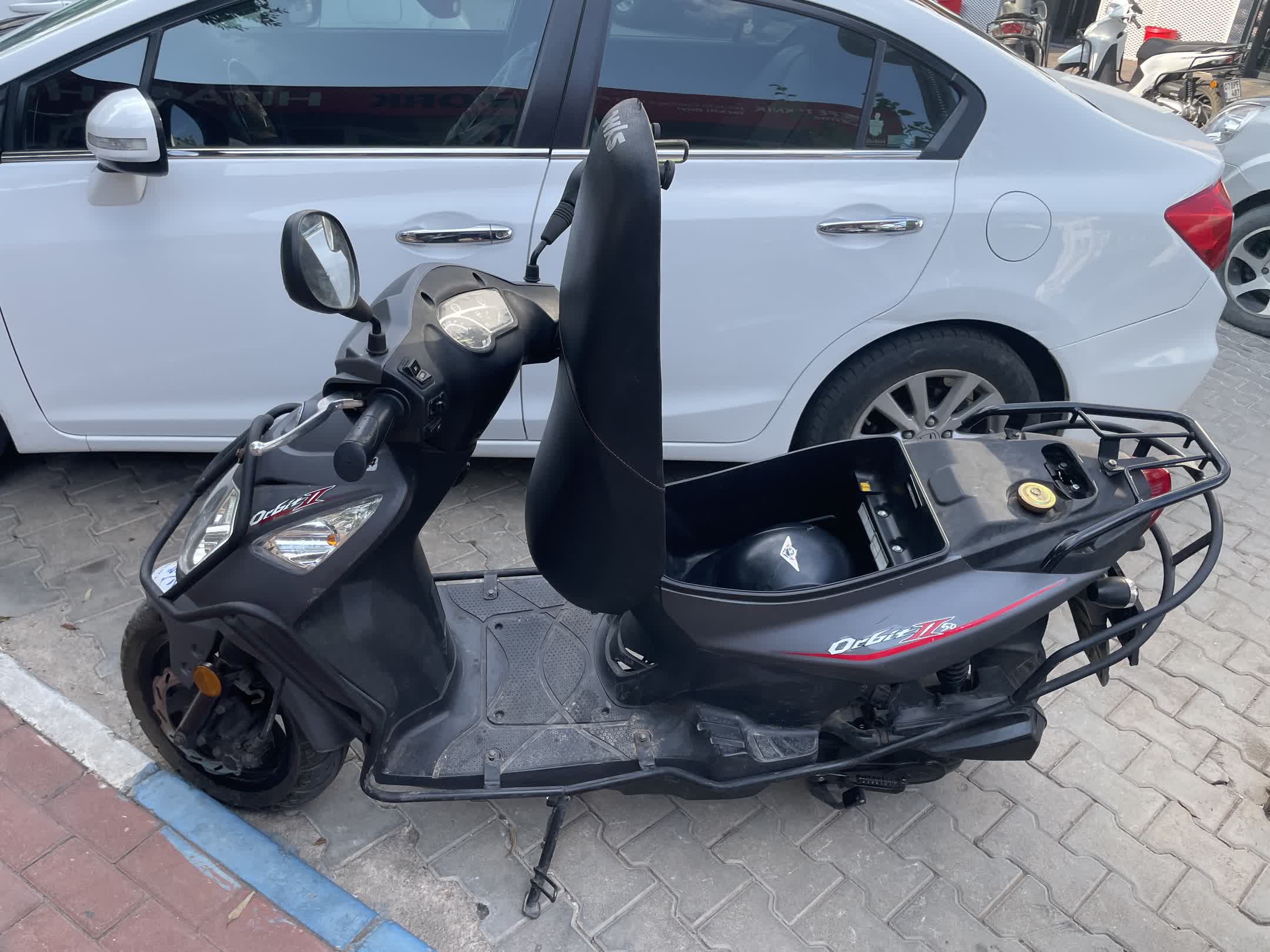
The scooter was small and very worn, but looked tough, seasoned—like it had endured years of battles. We paid, and the shop owner brought out a carbon-copy rental form. He and the older man used the scooter seat as a desk and wrote down my license information, muttering in Turkish—judging by tone alone, it felt like the older man outranked the shop owner, pointing and instructing throughout.
After the paperwork, they began teaching me how to start the engine, use the throttle, brake, etc. Because of the previous two rejections, I feared that if I performed poorly, they might revoke the rental. So I threw all my energy into memorizing and reproducing every step during the practice session. The result was… acceptable at best. At least I didn’t crash the scooter the moment it moved.
After wobbling a small circle around the courtyard, I patted the seat and said, “Great! Very easy to ride!”
Just when I thought the process was finished and we could pay, the shop owner said: I needed to go with him to another place, pay there, and ride the scooter back on my own.
I naïvely agreed and got onto the passenger seat. The older man leapt onto the driver’s seat, pointed at my helmet to remind me to wear it, and started the engine.
The road was steep—very steep. Sitting behind him, I kept tipping backward. To steady myself, I had no choice but to hold onto his shoulders. His polo shirt and white undershirt looked like a set, but didn’t feel like one. Initially, I placed my palms gently on his shoulders, but he was sweating from the heat. To avoid smothering him—and to avoid the awkward sensation—I lifted my palms and held on with just a few fingers. Not the most stable on a bumpy road, but at least I didn’t fall off.
After more than ten sharp turns, we arrived at another shop. Only then did I realize he was actually a mechanic—the owner of this second shop.
He didn’t speak English. Using gestures alone, he invited me to sit. In this unfamiliar environment, I behaved obediently—following whatever seemed right.
I handed him the euros. He looked up the exchange rate in his browser, typed the calculation (400 lira × 3 days) into his calculator, confirmed the amount with me, then gave me the remaining change. The whole process was… exhausting. Aside from basic translation apps, we used every possible method: grunts, hand gestures, numbers—anything to convey meaning. But in the end, we sealed the deal.
Before I rode away, he chose a helmet for me—the smallest, cutest one buried among a pile of giant motorcycle helmets. Not knowing how else to express gratitude, I gave him several thumbs-ups—the most sincere and enthusiastic thanks I could muster.
After saying goodbye, I rode off, trying to retrace the route, recalling the meaning of the street signs. Wobbly at first, but after a few intersections I felt more confident. Soon, I was riding freely back toward town.