Before I lose my mind and descend entirely into an abyss of emotion, what I want to tell you is this: from Sintra train station near Lisbon, take bus 403, and you will arrive in about an hour.
I feel like a drifter. My coat is dirty; the cuffs and hem are frayed and worn. My shirt clings to my skin, clammy and uncomfortable. The bus bumps along the mountain road, carrying fewer than ten people. We sit sparsely, strangers scattered by the windows. Occasionally, a few oblivious locals board the bus, disrupting the awkward equilibrium we had so painstakingly established. I am drowsy, trying to save my phone battery, sleeping against the plastic back of the seat in front of me. I don’t know how much time passes before we arrive. A subtle, microscopic excitement seeps out, spreading to my arms, neck, cheeks, and scalp.
This is an exploration of limits that belongs to the mind, not the physical body. Its so-called limit lies in the fact that it is the westernmost point of continental Europe. My limit lies in the fact that I was summoned by it, and my brain perceives it as an extremity. Thus, I bestow upon this act a modest name: A Safe Limit.
Accompanying my unfocused vision, I choose to swallow this scene down with the album From the Sea to the Land Beyond by the British band Sea Power. The whimpering noise and classical sounds, along with the faint crashing of waves and cries of seagulls, are a match made in heaven.
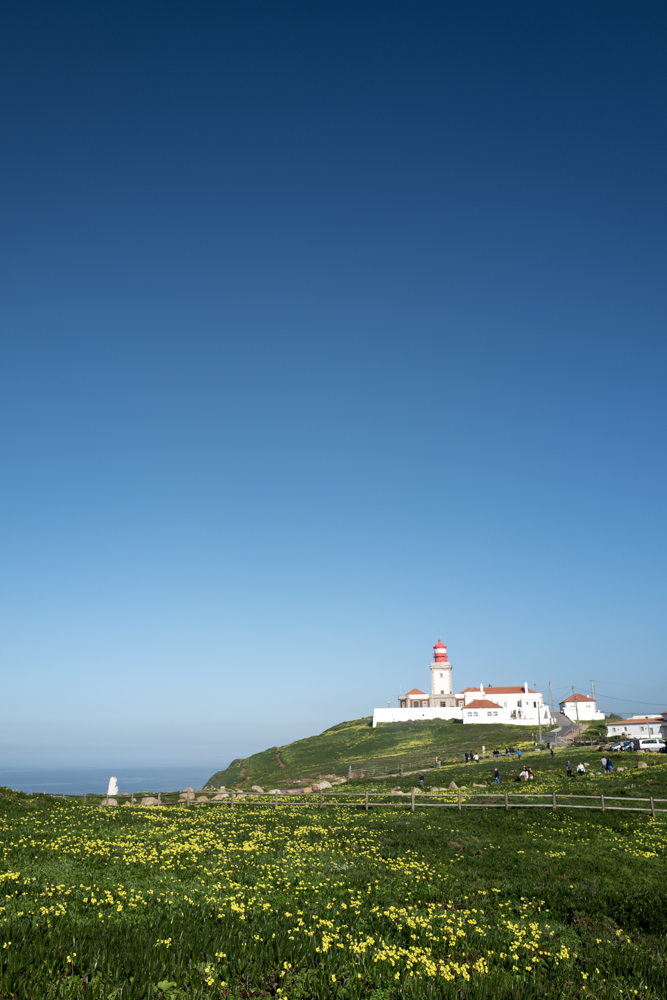
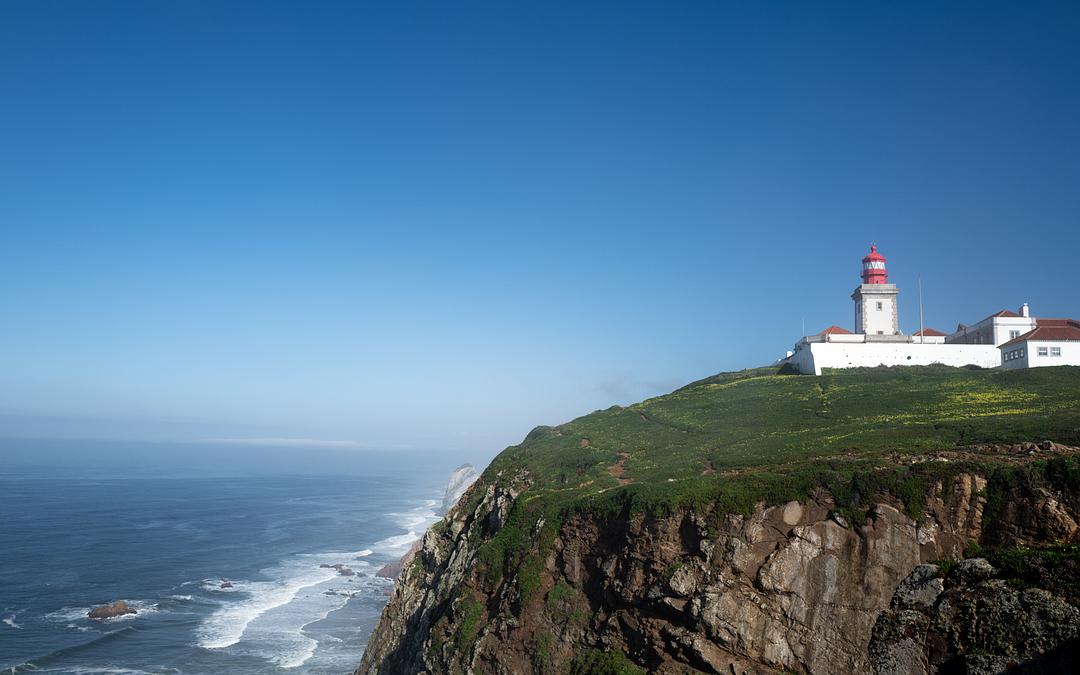
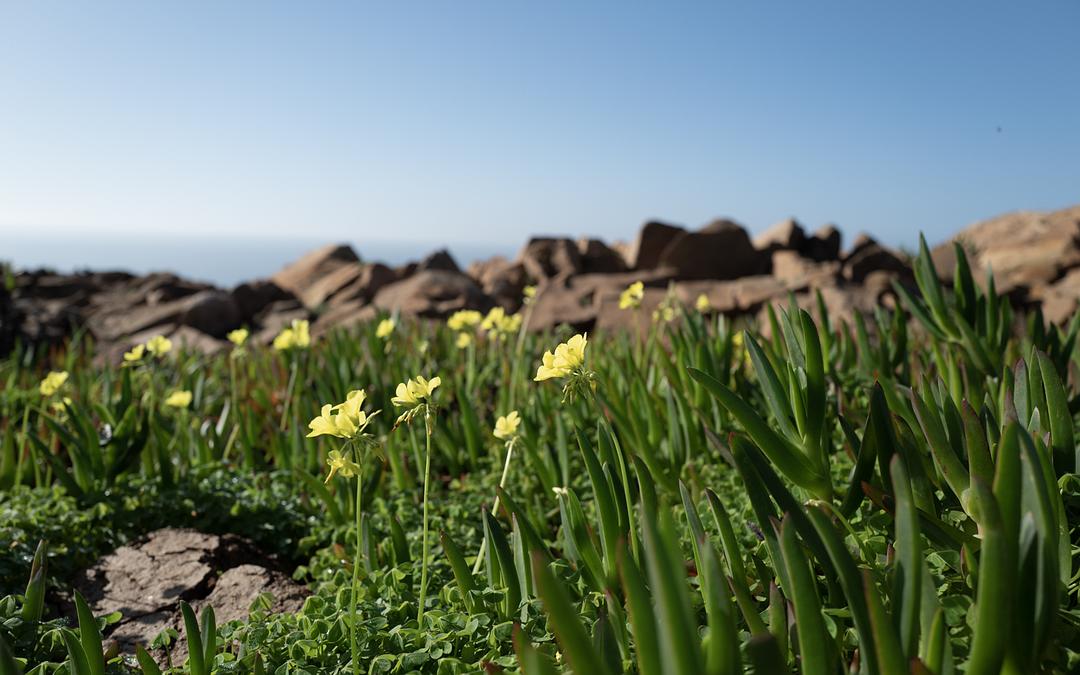
This is the terminus for wandering thoughts, a place that can satisfy everything we desire. Looking back, there are hills covered in green vegetation and small yellow flowers. Looking forward, there is the endless ocean and sky. To the side, a small red lighthouse serves as the perfect embellishment. Upon arriving here, all emotions are tethered—not because the space is too narrow, but because it is too vast, so vast that no end can be sought, no landing found, and thus, they are bound.
I want to recite poetry, but I do not know how. I want to take photos, but the camera cannot contain the distance. I want to think, but the ceaseless blowing of the sea wind causes my brain to stop its endless roaming and singing. The only things that can interrupt me are the tourists passing by from time to time. Some speak languages I understand, mostly discussing mundane and tedious daily lives. No matter how strong the sea wind is, it cannot blow away that putrid and suffocating scent. I walk in small steps along the safety fence, staying away from them, pacing continuously toward the other shore of my own spirit.
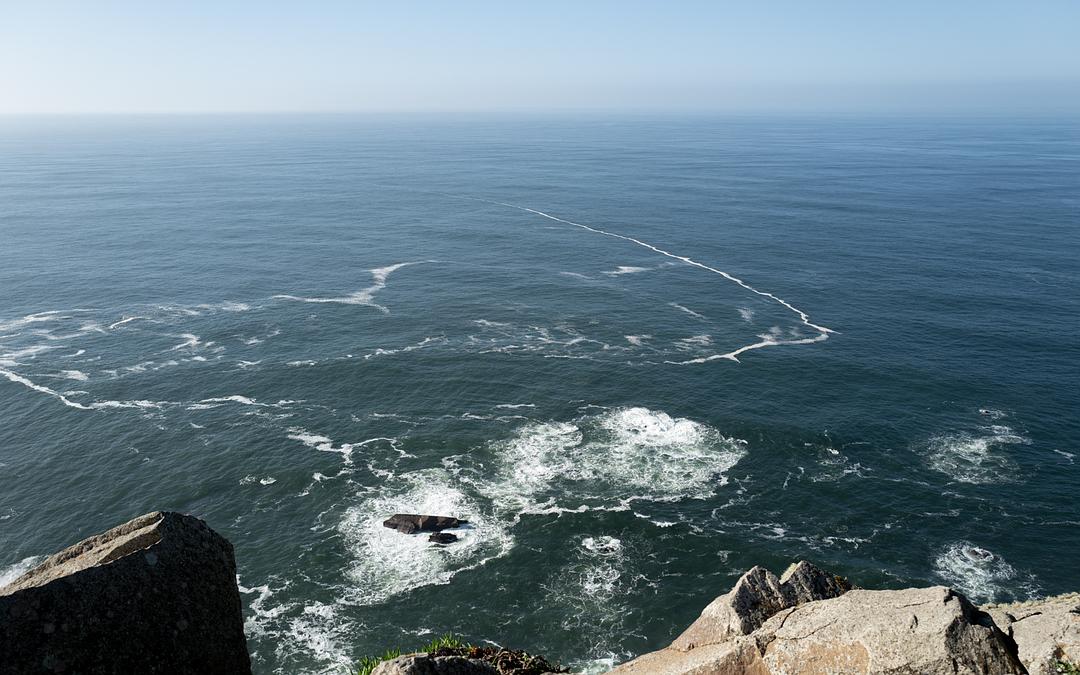
The rocks have been eroded into sharp shapes by the sea wind, yet the small yellow flowers are incredibly soft and exquisite. They stand in uniform rows, looking in a consistent direction—perhaps inward toward the endless continent, perhaps outward toward the endless ocean, or simply toward that lovely lighthouse, so much so that they feel they present a lovely appearance themselves.
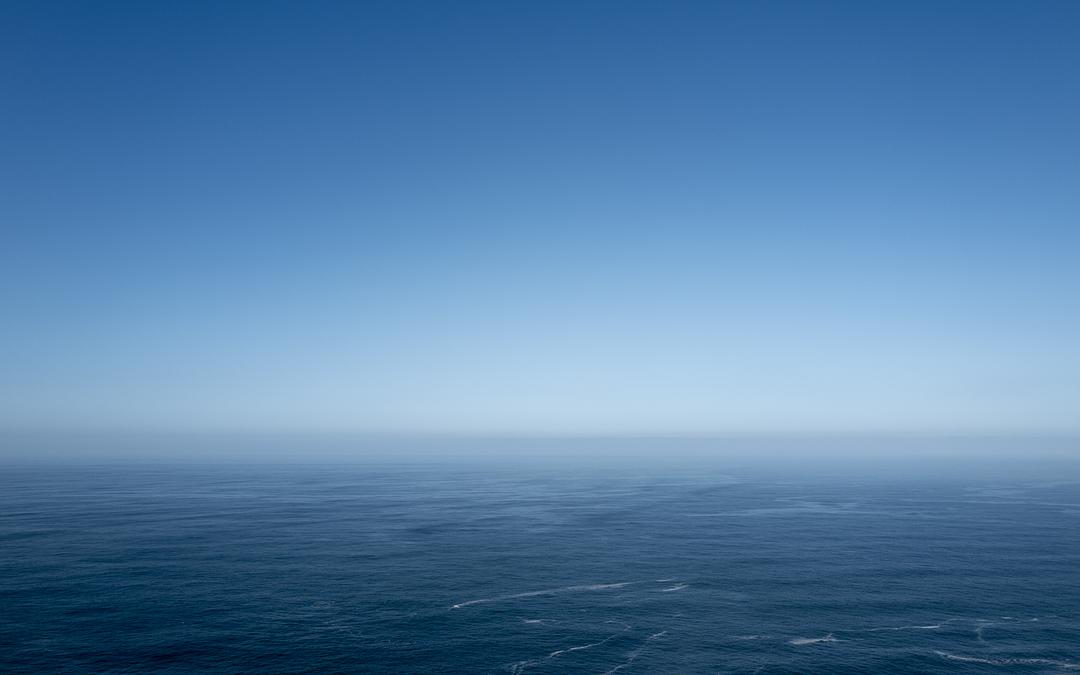
The sea wind continues to blow, stirring up sea fog. The faint mist diffuses, connecting the sky, the distant horizon, the nearby waves, the coast, and the cliffs—everything is linked together. It is likely difficult to get good visuals with photography here. As I mentioned before, when the camera lens extends toward the horizon, all it captures is complete defocus. Like the blind, everyone who arrives at this moment finds their eyes following a natural magnetic pull, instantly failing. Just as when facing the vast ocean and sky, we finally become equal and fragile.
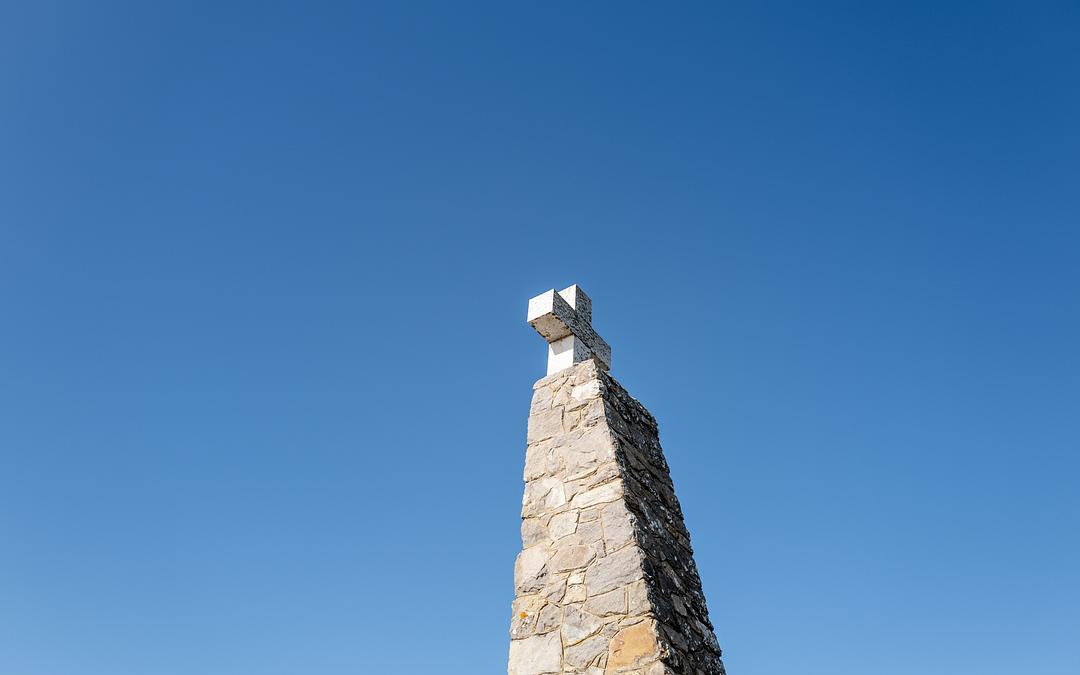
What is the price of losing one’s vision? I think it is imagination. I feel that in this moment, I have lost my imagination, unable to use any conceived elements to piece together a rational world. Every brick, every pane of glass, is sucked into the endless horizon. Colors—what colors remain? There is nothing before my eyes but blue. I feel angry, yet have nowhere to vent it. The anger flows away rapidly, leaving me silently. Then joy burrows out, but it doesn’t last long, vanishing just as quickly.
I have been stood up by the world. All sensory emotions have fallen through, leaving me an empty shell, a structure. Nature shaped this structure, and all the results generated by this structure have drifted back to nature. Thus, we have become one. Perhaps I shouldn’t be so confident as to call me and it “we”. The polite way to put it is “them.” I have become “them,” and I will no longer be “me.”
Gradually, I realize that I cannot stay lost, or I will melt forever into the endless ocean and fantasy. So, I attempt to regain my reason and begin to turn away from this bewildered, magnificent place.
I return to the nearby bus stop. While waiting for the bus, I write this passage in my notes: Looking left and right—on one side is the sentimental coast, on the other is the bus of life. Ultimately, no matter how vast it is there, we eventually need to live.